
If you’ve ever watched a dog run an agility course and thought, “My dog would love that,” you’re probably right. Agility can be a fantastic outlet for athletic dogs, busy brains, and owners who want a fun goal to train toward. What many people do not realize at first is that the dogs who look smooth on course are rarely “naturals.” They’re dogs with foundations. That’s why dog agility training starts long before the first jump. It starts with focus, impulse control, and obedience that holds up around distractions.
At Off Leash K9 Training of Kansas City, I work with owners across the Kansas City, MO and KS area who want more than basic manners. They want a dog that can listen, work, and stay confident in new environments. In this post, I’ll explain what makes dog agility training successful, the obedience skills that keep it safe, and how to build a training plan that supports long-term behavior transformation.
Why dog agility training depends on obedience first
Agility looks fast, but the foundation is calm. Dogs have to move quickly while still thinking clearly. Without a strong base, agility becomes sloppy, stressful, or unsafe.
The most common issues I see when someone jumps into dog agility training too soon include:
- Dogs that cannot disengage from the environment
- Overexcitement that turns into barking, spinning, or grabbing equipment
- Inconsistent recalls and “selective hearing”
- Leash frustration around other dogs
- Weak confidence on new surfaces, tunnels, or moving obstacles
When obedience is solid, agility becomes cleaner and more enjoyable. Obedience training builds communication, and communication builds confidence. That confidence shows up as better problem-solving, smoother movement, and a dog that can recover quickly when something changes.
If you are working on reliability in a busy household, the same structure that supports agility also supports daily life. Multi Dog Success: Expert Training Tips is a helpful read because group dynamics and impulse control matter in sports environments too.
The core skills that make dog agility training safer
When I coach owners who are interested in sports goals, I keep it practical. You do not need dozens of commands. You need a few behaviors that create control and confidence.
Here are the foundations I recommend before you level up dog agility training:
- Engagement and focus
Your dog should be able to choose you over distractions. This is the start of everything. - Reliable recall foundations
Recall is not just for the park. In dog agility training, recall supports safety and clear transitions between obstacles. - Place with duration
Place teaches your dog how to settle, wait their turn, and recover between reps. - Loose leash walking and polite transitions
The walk to and from the training area matters. Calm handling prevents excitement spirals. - Impulse control around motion
Dogs need to wait, release, and drive forward only on cue.
These foundations also support off-leash reliability. When a dog learns to respond under excitement, they are more dependable in real-world situations. And because sports environments can be intense, these skills often create a meaningful behavior transformation for dogs that struggle with overarousal.
A simple step-by-step plan to start dog agility training the right way
You do not need to start with jumps. In fact, starting too fast often creates sloppy habits. A better path is to build control first, then add fun complexity.
Here is a practical plan I recommend for dog agility training foundations:
- Step 1: Build a strong “ready to work” routine
Short engagement reps, eye contact, and calm waiting before you begin. - Step 2: Train Place as your reset button
Place for 30 to 60 seconds, reward calm, release, repeat. - Step 3: Add body awareness games
Controlled stepping over poles on the ground, low balance work, and slow movement patterns. - Step 4: Practice directional movement on leash
Teach your dog to follow you, turn with you, and drive forward on cue. - Step 5: Keep sessions short
Five to ten minutes of clean reps beats a long session full of mistakes.
For an authoritative overview of agility basics and safety considerations, the AKC has a helpful guide on getting started in dog agility. It aligns well with my recommendation to prioritize foundations before speed.
Dog-Friendly Business Spotlight
If you want a local place to explore the sport side of dog agility training, check out All-Star Dog Sports in the Kansas City metro area. They are known as an agility training and event center, which can be a great option for dog owners who want structured practice and a community that understands the sport.
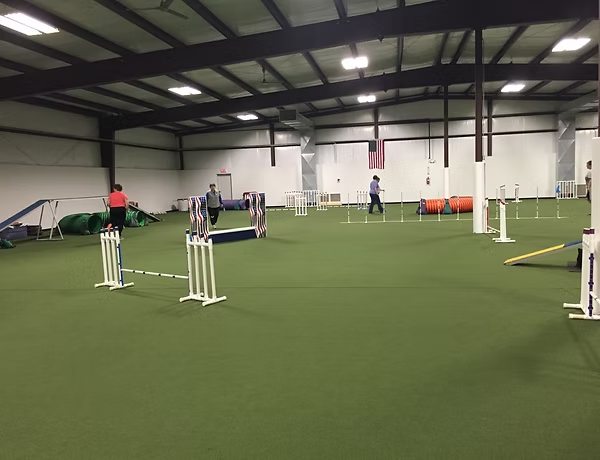
From a training perspective, facilities like this are most enjoyable when your dog arrives with focus and obedience already in place. The better your dog’s foundations, the easier it is to learn new skills, stay safe around equipment, and build confidence in a busy environment. That is why I always connect sports goals back to obedience first.
How Off Leash K9 Training of Kansas City supports dog agility training goals
At Off Leash K9 Training of Kansas City, my job is to help you build a dog that can perform in real life, not just at home. If your long-term goal includes dog agility training, we start with the same foundation that makes everything easier: engagement, obedience training, impulse control, and calm handling around distractions.
Depending on your dog and schedule, the right fit may include Private Lessons, Basic Obedience, Basic & Advanced Obedience, or an immersive Board and Train option to jumpstart structure and follow-through. You can review options on our Dog Training Programs page.
The goal is simple: dog agility training that feels fun and confident, supported by obedience that keeps your dog safer and more responsive.
If you want to build better focus, cleaner obedience, and a confident dog that can handle exciting environments, I can help. Reach out to Off Leash K9 Training of Kansas City through our Contact Page and tell me what goals you have in mind. With a clear plan for dog agility training, we can build strong foundations that carry into everything you do together.