
Dog Boarding Training for a Smoother Stay
Boarding your dog can be convenient when you travel, but a new environment can also bring unfamiliar people, sounds, routines, and dogs. A little dog boarding training before the stay can make those changes easier to handle.
At Off Leash K9 Training of Kansas City, I encourage owners to think about boarding preparation as more than packing food and updating vaccinations. Your dog should also have the obedience and confidence needed to follow another person, settle away from home, and move calmly through unfamiliar situations.
The best time to prepare is before your trip is on the calendar. By practicing basic commands, crate or kennel comfort, separation, and calm greetings ahead of time, you can give your dog a stronger foundation for a successful boarding experience.
Build Obedience Before the Boarding Stay
Good dog boarding training starts with behaviors your dog already understands at home.
A boarding facility may have its own routines, but reliable obedience gives staff a clearer way to communicate with your dog. Focus on practical commands such as:
- Come for moving your dog safely from one area to another
- Sit for greetings, leash attachment, and waiting
- Place for practicing calm settling
- Down for relaxation and impulse control
- Heel for more manageable leash walking
- Leave it for redirecting attention from food, toys, or distractions
Practice these commands with different people when possible. A dog who only listens to one family member may struggle when someone new handles the leash.
At Off Leash K9 Training of Kansas City, our Basic & Advanced Obedience program builds foundational commands and then develops reliability around greater distances and distractions.
This kind of obedience training is useful far beyond boarding. It supports better everyday manners, dog confidence, and off-leash reliability in many real-world situations.
Practice Being Away From Home
For some dogs, the hardest part of boarding is not the facility itself. It is suddenly being separated from their normal household and routine.
Include short periods of independence in your dog boarding training plan.
If your dog is accustomed to following you everywhere, begin by creating small, positive separations at home. Ask your dog to settle in another room, spend short periods resting in a crate or designated area, or remain with a trusted friend while you leave briefly.
Gradually increase the duration as your dog becomes comfortable.
You can also consider a short trial visit or overnight stay before a longer vacation. The American Kennel Club recommends preparing ahead when choosing boarding care and notes that a trial overnight stay can help owners see how their dog handles the experience before an extended trip.
For additional planning ideas, the AKC offers a helpful guide on what to know when boarding your dog.
The goal is not to make your dog completely independent from you. It is to teach them that temporary separation is manageable and that familiar routines will return.
Make Crate and Kennel Time Familiar
Even dogs who spend much of their boarding stay playing or exercising may still need to rest in an individual kennel or enclosed space.
That makes comfortable confinement an important part of dog boarding training.
If your dog already uses a crate at home, continue practicing calm rest periods. Avoid using the crate only when you leave the house, since that can make confinement predict your departure.
Instead, practice while you are home.
Give your dog time to:
- Enter the crate or designated resting space calmly.
- Settle without constant attention.
- Remain relaxed while you move around the house.
- Wait briefly before being released.
- Exit only after becoming calm.
A dog who can relax independently is often better equipped to handle downtime during boarding.
If your dog becomes extremely distressed when confined or separated, that is worth addressing before a trip rather than hoping the behavior disappears at the boarding facility.
Regional Dog-Friendly Business Spotlight
Kate’s Canine Resort is located at 2823 Main Street in Kansas City, Missouri.
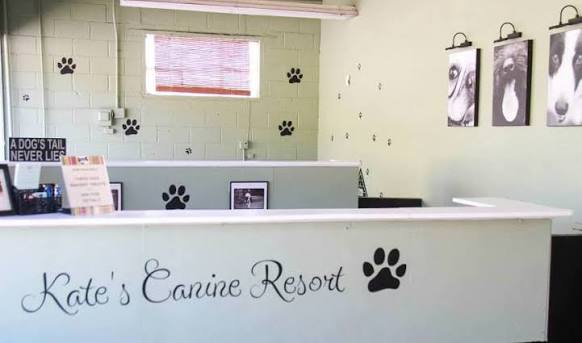
The business offers overnight dog boarding with private accommodations and all-day play included. It also provides daycare with indoor and outdoor play space as well as grooming services.
A facility that combines rest with opportunities for activity can be useful for owners who need care while traveling. However, even an engaging environment cannot replace the preparation a dog receives before arriving.
A dog with solid dog boarding training is better prepared to transition between activity and rest, respond to handlers, walk on leash, and remain composed when the environment changes.
Kate’s Canine Resort is featured here as a regional boarding resource for Kansas City dog owners. It is a separate business from Off Leash K9 Training of Kansas City and is not being presented as a dog training provider.
Prepare Your Dog for Group Environments
Some boarding and daycare facilities offer group play, but enjoying other dogs is not the same thing as having good social skills.
A dog who becomes overly excited, ignores recalls, guards toys, or overwhelms other dogs may have difficulty in a group setting.
Good dog boarding training includes teaching your dog that another dog does not automatically mean playtime.
Practice neutral behavior around other dogs by rewarding your dog for:
- Walking past another dog without pulling
- Responding to your name around distractions
- Returning attention to the handler
- Waiting calmly before greetings
- Disengaging when asked
- Settling after exciting activity
Neutrality is an important skill. Your dog does not need to greet every dog they see.
Our guide to multi-dog training success explains why individual obedience and clear structure matter when several dogs are sharing the same environment.
Remember that boarding facilities determine whether dogs are appropriate for group play based on their own policies and evaluations. Never assume your dog will automatically participate simply because they enjoy playing with familiar dogs.
Keep the Daily Routine Predictable
Dogs often adjust more easily when familiar routines remain consistent.
In the days before boarding, avoid making unnecessary changes to feeding times, exercise schedules, or sleeping routines. Provide the facility with clear instructions about your dog’s normal habits.
You should also prepare:
- Correctly portioned food
- Medication instructions
- Updated vaccination information
- Emergency contacts
- Veterinary information
- Feeding schedule
- Known allergies or sensitivities
- Important behavioral information
The AKC recommends providing boarding facilities with current identification and emergency information and packing enough familiar food for the stay.
If your trip involves other changes to your dog’s routine, our holiday dog travel tips provide additional ideas for keeping travel-related changes manageable.
Use Exercise Without Creating Exhaustion
Giving your dog some physical and mental activity before boarding can help reduce excess energy, but exhausting your dog immediately before drop-off is not necessary.
Instead, aim for normal, structured activity.
Take a walk. Practice obedience. Let your dog sniff. Work through several familiar commands.
Your dog boarding training should teach your dog how to become calm after activity, not simply rely on fatigue to create good behavior.
That ability to switch from activity to rest is useful during daycare, boarding, travel, vet visits, and everyday life.
Ready to Make Boarding Easier?
A successful boarding stay begins before you hand over the leash. Obedience, comfortable separation, calm confinement, social neutrality, and predictable routines all give your dog tools for adapting to a temporary change.
Consistent dog boarding training can also reveal areas that need work before your travel date. If your dog cannot settle away from you, becomes uncontrollable around other dogs, or ignores familiar commands in new environments, addressing those behaviors early can make future outings much easier.
Off Leash K9 Training of Kansas City helps dog owners throughout Kansas City, MO/KS develop practical obedience, dog confidence, behavior transformation, and reliable responses around real-world distractions.
Whether you are preparing for boarding, travel, daycare, or simply want a dog who listens more consistently, contact Off Leash K9 Training of Kansas City to learn which professional dog training program fits your goals.