
Training treats for dogs can be incredibly useful when you are teaching new behaviors, building focus, or practicing obedience around distractions. But the treat itself is only one part of successful training. Timing, consistency, clear communication, and knowing when to reward all matter just as much.
At Off Leash K9 Training of Kansas City, I often remind owners that treats should support training rather than become something a dog has to see before deciding to listen. When used correctly, rewards can help strengthen obedience training, improve dog confidence, and make learning clearer for both the dog and owner.
The goal is not to keep a treat in your hand forever. The goal is to use training treats for dogs strategically while building reliable behaviors that eventually work in everyday situations.
Choose Rewards That Match the Training Challenge
Not every reward has the same value to every dog. A piece of regular kibble might be exciting enough during a quiet training session at home, while a more distracting environment may require something your dog finds much more motivating.
The American Kennel Club explains that the reward should be valuable enough to compete with the distractions in the environment. Dogs may need higher-value food rewards when practicing around new sights, smells, people, or other dogs.
When choosing training treats for dogs, I recommend thinking about three things:
- Size: Small pieces allow you to complete more repetitions without filling your dog up too quickly.
- Ease of eating: Rewards that can be eaten quickly help keep training sessions moving.
- Value: Save your dog’s favorite rewards for difficult skills or distracting environments.
Good training is still about communication. Give the command first, let your dog complete the behavior, then deliver the reward. Showing food before every command can accidentally teach your dog that seeing a treat is part of the instruction.
Our guide to multi-dog training success also explains why structure and clear expectations become especially important when dogs are working around additional distractions.
Use Training Treats Without Creating Dependence
One of the most common concerns owners have about training treats for dogs is whether their dog will eventually refuse to listen without food.
That can happen when treats become a bribe instead of a reward.
At Off Leash K9 Training of Kansas City, I want the dog to understand that following a command leads to a positive outcome. The dog should not need to inspect your hand before deciding whether obedience is worthwhile.
Start by rewarding new behaviors frequently. Once your dog clearly understands the command, begin varying when rewards appear. You can also combine food with praise, play, affection, or access to something your dog enjoys.
For dogs that need a more complete obedience foundation, our Dog Training Programs include options such as Basic Obedience, Private Lessons, Puppy Training, Off-Leash Obedience, and Board and Train.
The bigger objective is reliable behavior in real life. Your dog should eventually be able to respond whether you are standing in the kitchen with treats nearby or walking through a busy Kansas City neighborhood with distractions everywhere.
Regional Dog-Friendly Business Spotlight
A fitting local resource for this week’s topic is Kansas City Dog Treats Co., a Kansas City-based company created by local shelter dog advocate Scott Poore. The company makes KC-inspired dog treats and describes its products as being made with simple ingredients and a strong connection to the Kansas City dog community.
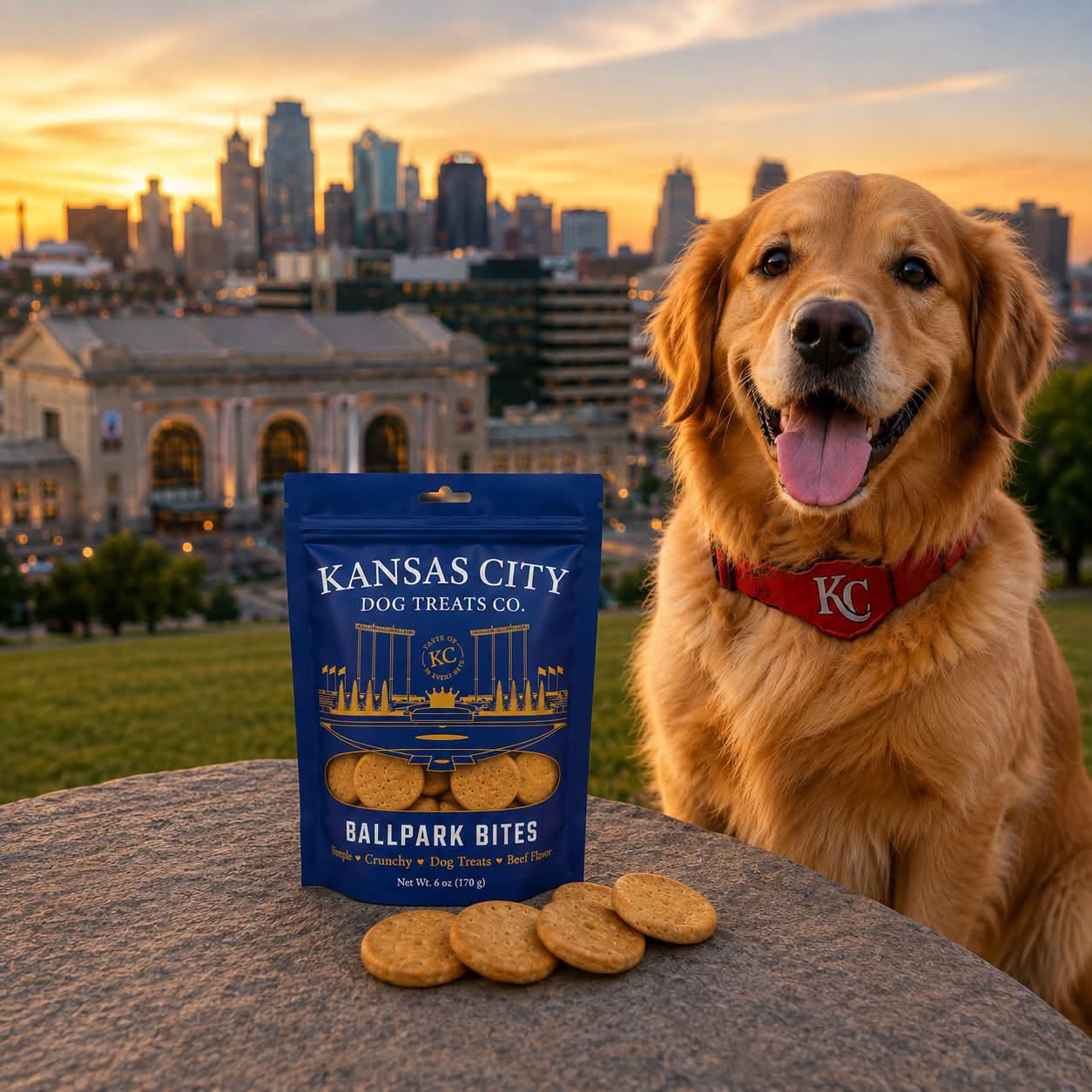
For owners who use training treats for dogs, visiting or ordering from a dog-focused local business can also be a good reminder that different dogs value different rewards. Some dogs work enthusiastically for almost any food, while others need something particularly interesting when distractions increase.
Kansas City Dog Treats Co. is a separate local resource and is not being presented as a dog training provider. You can visit Kansas City Dog Treats Co. to learn more about its products.
Regardless of which treats you choose, remember that food does not replace professional dog training. The reward helps reinforce a behavior, while communication, repetition, boundaries, and practice create long-term reliability.
Practice Beyond the Treat Bag
Once your dog understands a skill, begin practicing it in different places. This is where training treats for dogs can help bridge the gap between learning at home and responding reliably in the real world.
Practice commands such as:
- Sit near mild distractions
- Place while family members move around
- Heel on neighborhood walks
- Come from increasing distances
- Leave it around food or interesting objects
- Down while activity happens nearby
Increase difficulty gradually instead of changing everything at once.
Our New Year’s guide to dog training success highlights the value of consistency and realistic training routines. The same principle applies year-round. Short, focused practice sessions performed regularly are more valuable than occasional marathon sessions.
As your dog’s skills improve, training treats for dogs should become one tool among many rather than the only reason your dog cooperates.
Build Obedience That Works in Real Life
Using training treats for dogs effectively is about much more than handing out snacks. A well-timed reward can help your dog understand exactly which behavior you want, while structured practice builds the reliability needed outside a controlled training session.
At Off Leash K9 Training of Kansas City, our focus is helping owners create dependable communication, stronger obedience, better dog confidence, and greater off-leash reliability.
If treats work at home but your dog still struggles to listen around distractions, the missing piece may be structure rather than motivation. Professional dog training can help turn individual commands into dependable everyday behavior.
If you’re ready to build clearer communication and more reliable obedience, contact Off Leash K9 Training of Kansas City and let’s create a training plan that fits your dog and your goals.